
Products
2차메뉴
3차메뉴
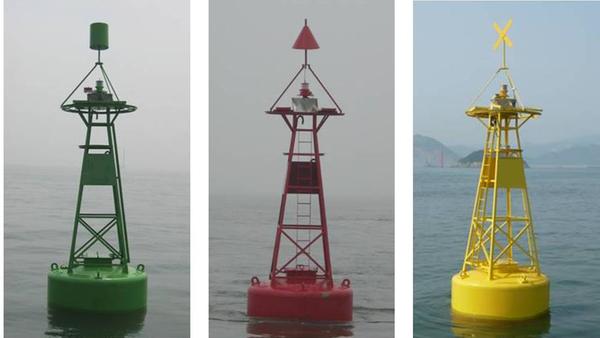
MSL-Light Buoys(Steel Light Buoys for A to N)
Port guidance and use as a barrier sign for navigating ships
Buoys are floating maritime structures used to guide a sailing boat to the harbor or signal an obstacle.
They mark courses, dangerous rocks, shallow waters, no sailing zones, and maritime construction sites. When a lamp is installed in them, they are called light buoys.
They are placed to signal rocks, no sailing zones, course width, changing points of course, and changing points of water level at the harbor.
They mark courses, dangerous rocks, shallow waters, no sailing zones, and maritime construction sites. When a lamp is installed in them, they are called light buoys.
They are placed to signal rocks, no sailing zones, course width, changing points of course, and changing points of water level at the harbor.
▼ Please go down to see the description/features/specifications
- Buoys are floating maritime structures used to guide a sailing boat to the harbor or signal an obstacle. They mark courses, dangerous rocks, shallow waters, no sailing zones, and maritime construction sites. When a lamp is installed in them, they are called light buoys.
- They are placed to signal rocks, no sailing zones, course width, changing points of course, and changing points of water level at the harbor.
Management of Light Buoys
- Regular Buoy Inspections (at least once a month)
- Visual inspection of the buoy's condition and paint status.
- Verification of the buoy's location (checking for movement).
- Inspection of the beacon's illumination status and power equipment.
- Examination of the wiring condition.
- Identification of any functional issues.
- Preparation of a regular inspection report.
- Inspection by the Relevant Port Authority (twice a year)
- Retrieval Inspection (once every 2 years)
- Maintenance inspection of the paint condition of the object.
- Maintenance inspection of power supply facilities.
- Mooring maintenance inspection.
- Routine Beacon Inspection (once every 3 years)
- Conducted after 3 years of use.
- Maintenance and inspection of beacon flashers, lenses, and modules.
Storage Criteria for Spare Navigational Aids Equipment
- Light Buoys: In the case of waters within harbors, a minimum of 15% of the installation quantity, and in the case of waters outside harbors, a minimum of 20% of the installation quantity (for installations with five units or fewer, a minimum of one unit).
- Beacons: In the case of waters within harbors, a minimum of 15% of the installation quantity, and in the case of waters outside harbors, a minimum of 20% of the installation quantity (for installations with five units or fewer, a minimum of one unit).
Used for guiding vessels in navigation, marking dangerous shoals, shallow depths, restricted navigation areas, offshore construction zones, and other purposes, these are floating structures in the sea, with buoys installed on those that do have buoys (referred to as buoys) and those without buoys are referred to as beacons.
They are installed at reefs, restricted navigation areas, the width of fairways, turning points in the channels, and points where the water depth changes within harbors.
| Type | Steel Light Buoys | |||
|---|---|---|---|---|
| LANBY-100 | LS-35 | LL-28 | LL-26(M) | |
| Installation place |
Sheltered waters | Sheltered waters (7kt under) |
Sheltered waters (7kt under) |
Sheltered waters (3kt under) |
| Water depth | 40m > | 10~40m | 10~40m | 10~30m |
| Lantern | 7NM, 9NM | 7NM, 9NM | 7NM, 9NM | 7NM, 9NM |
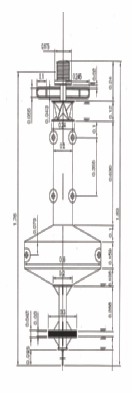
| Installation drawing |
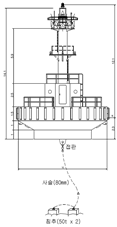 |
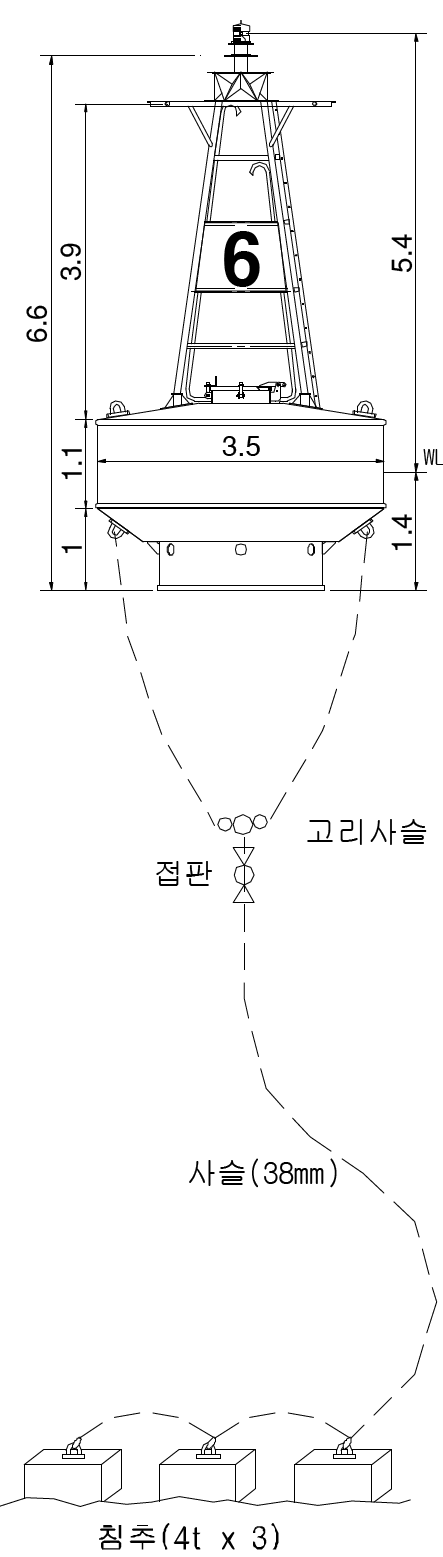 |
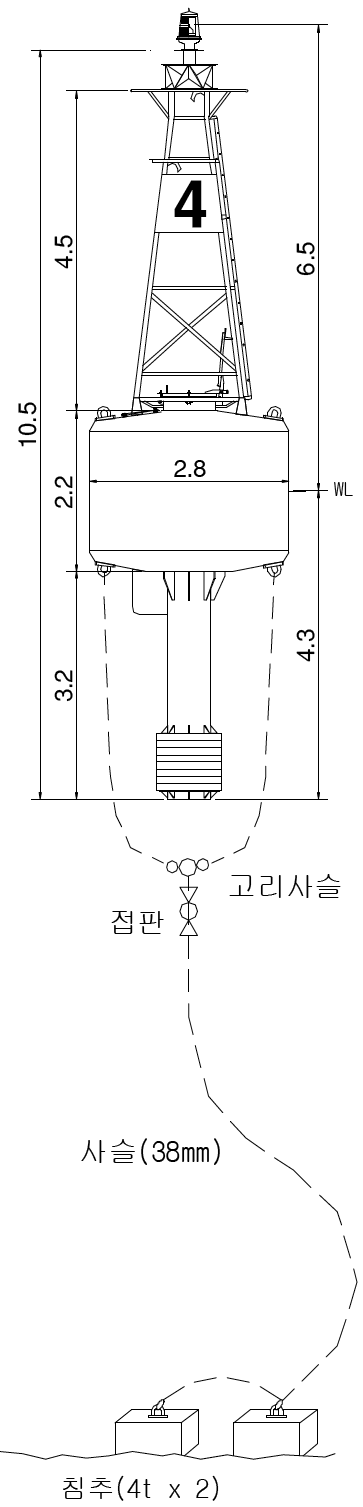 |
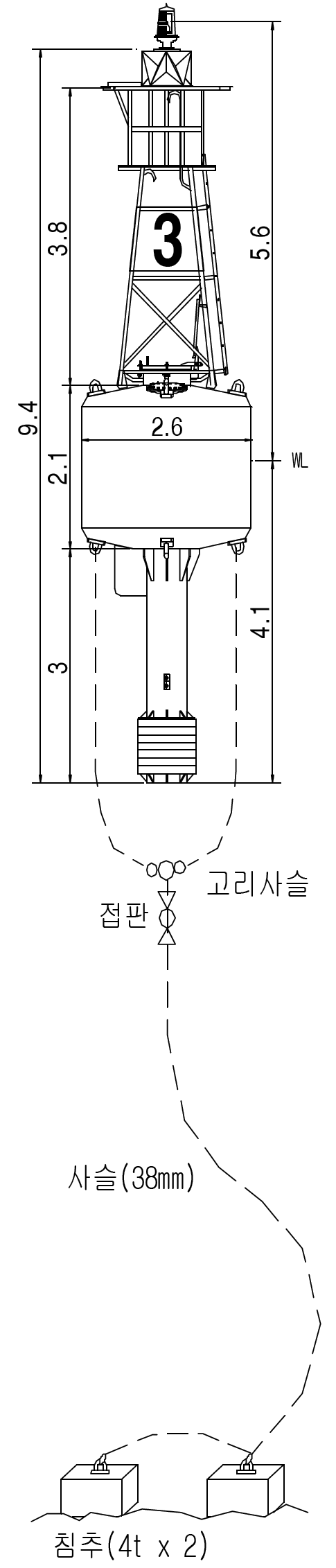 |
| Type | Steel Light Buoys | ||||
|---|---|---|---|---|---|
| LL-24 | LS-24 | LSP-28 | U-17C(P) | U-17C(S) | |
| Installation place |
Sheltered waters (3kt under) |
Sheltered waters (3kt under) |
Sheltered waters (2kt under |
Sheltered waters (5kt under) |
Sheltered waters (5kt under) |
| Water depth | 10~20m | 2~20m | 13~17m | 2~25m | 2~25m |
| Installation drawing |
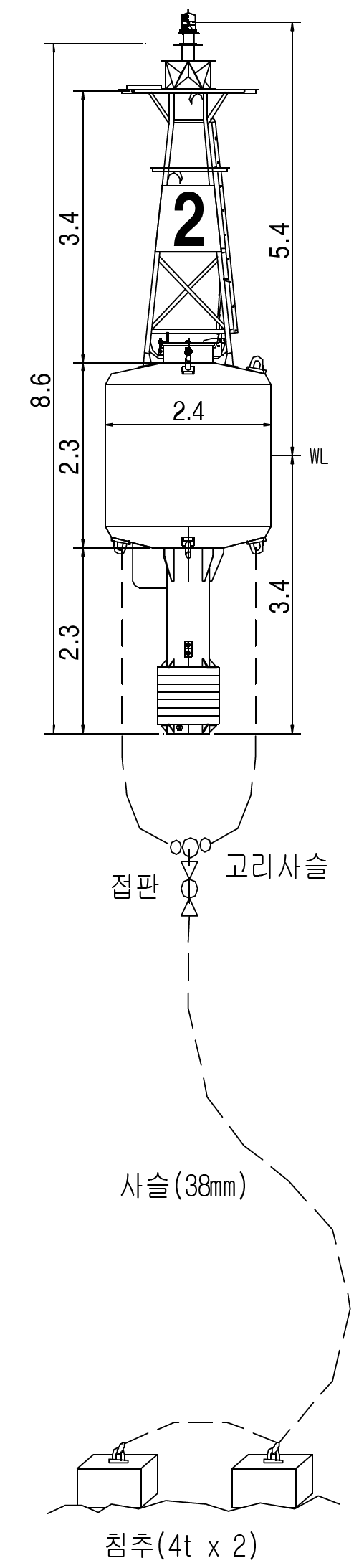 |
 |
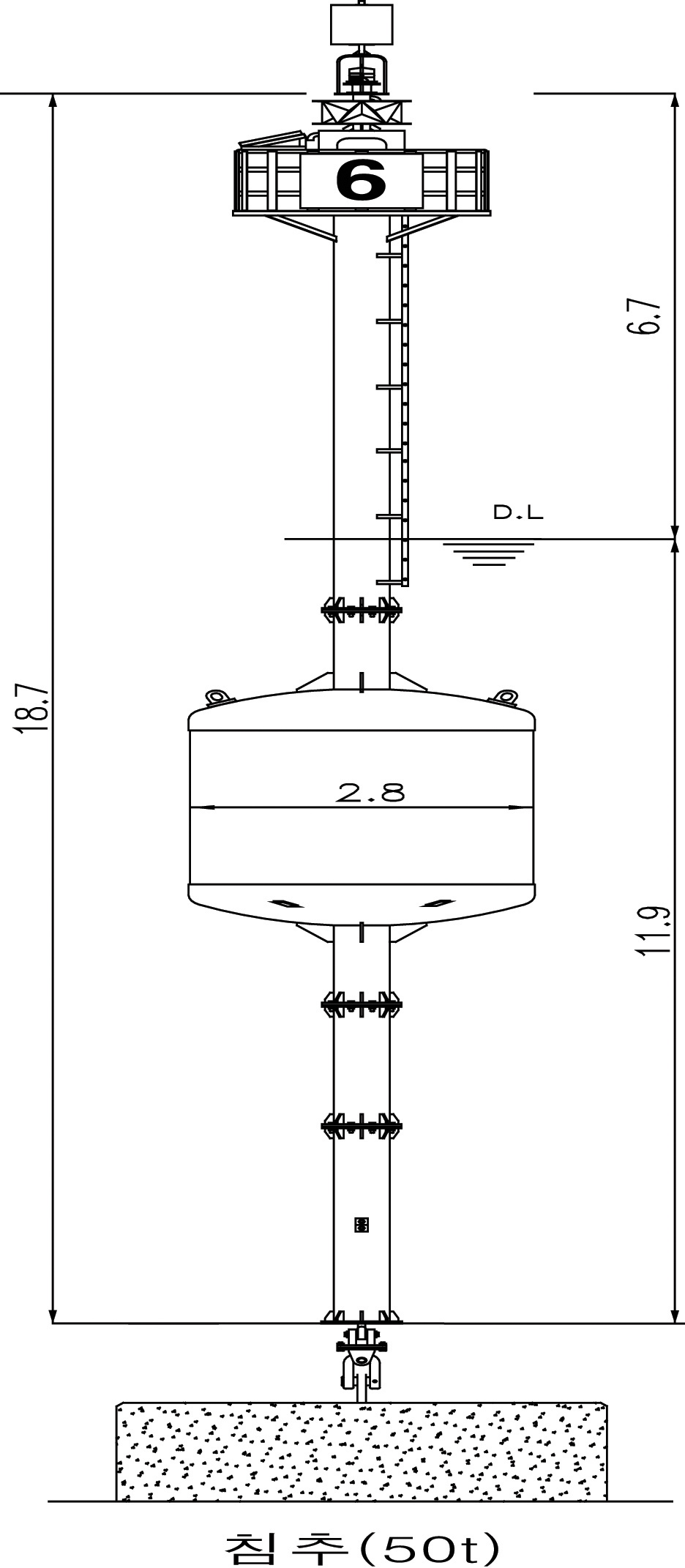 |
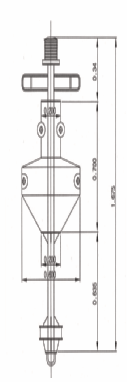
| 
|